
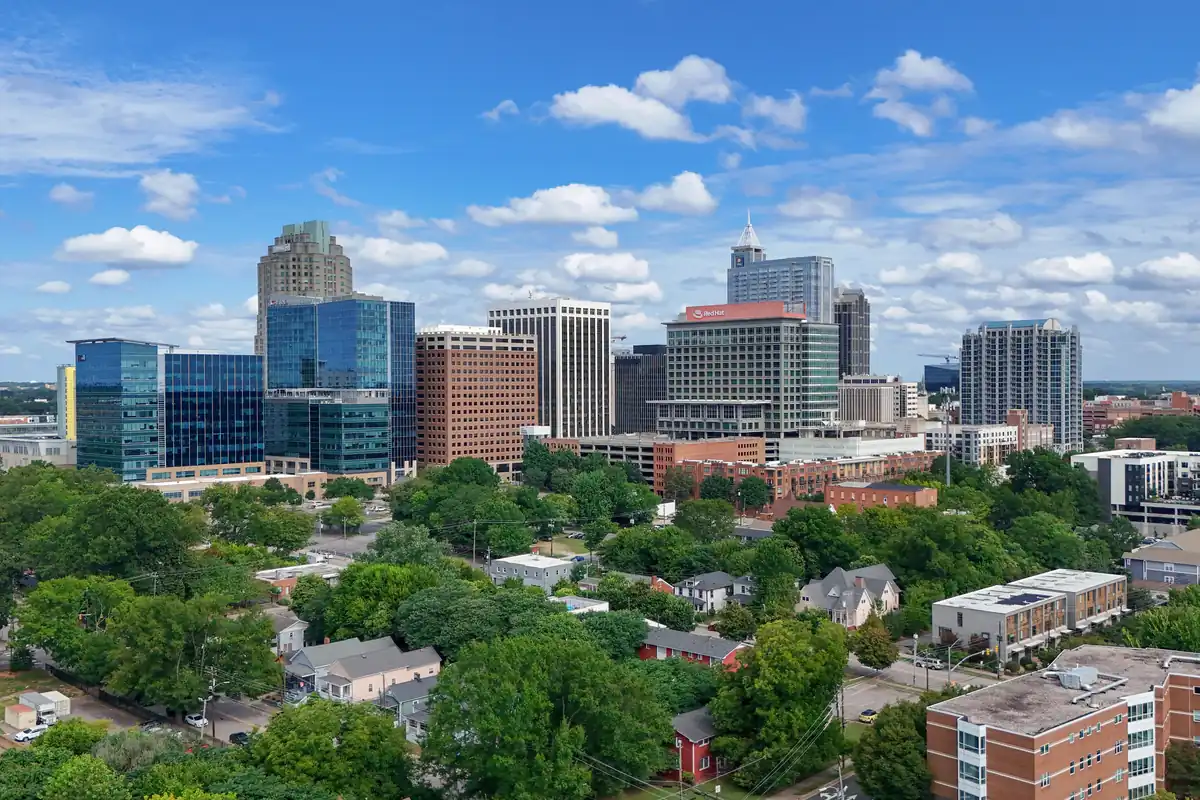

Real estate investing in Raleigh, NC is a long-term bet on one of the country's strongest job markets. The typical Raleigh home is worth about $425,000, and houses rent for around $2,090 a month.1,2 Prices have dipped slightly and a wave of new apartments has softened rents, giving buyers more room to negotiate than in years.
Raleigh is North Carolina's capital and second-largest city, with about 506,000 residents in 2025, up 8.3% since 2020.3 The Raleigh-Cary metro grew 2.4% in a single year to nearly 1.6 million people, the 10th-fastest growth of any large U.S. metro, or roughly 100 new residents a day.4 Many newcomers rent before they buy, which keeps demand for single-family rental homes steady.
Why investors are watching Raleigh in 2026
- Life-science plants nearby. Novartis is investing $771 million and adding 700 jobs in Durham and Wake counties, and Genentech is building a $2 billion plant in Holly Springs with more than 500 jobs.5,6
- High-paying headquarters jobs. Ralliant chose North Hills for its global headquarters, with 180 jobs paying an average of about $189,000.8
- Fast metro growth. The region added roughly 37,000 residents in a year, among the fastest growth of any large U.S. metro.4
- Room to negotiate. Home values are down 1.7% from a year ago, and apartment concessions are common, so buyers aren't competing with the bidding wars of 2021 and 2022.1,14
Raleigh housing and rental market in 2026
Raleigh prices have cooled a little. Zillow's typical home value of about $425,000 is down 1.7% from a year ago, and homes go under contract in around 30 days.1 Well-priced homes still sell quickly, but sellers are more open to offers.
Rents for houses are holding steady while apartments are under pressure. The average house rents for about $2,090 a month, down about $10 from a year ago, with about 809 houses listed for rent and an average of about 82 days on the market.2 Across all rentals, including apartments, the average is about $1,800, down about $50.2 More than 26,000 apartments opened across the metro in 2024 and 2025, and about 60% of rental listings offered a concession in mid-2026.13,14
- Typical home value: ~$425,000, down 1.7% year over year.1
- House rent: ~$2,090 a month, down ~$10 year over year.2
- All rentals: ~$1,800 a month, down ~$50 year over year.2
- Days to pending: ~30 days.1
- Gross rent-to-price: ~5.9% a year. Annual house rent ($2,090 × 12) ÷ typical home value ($424,663), before taxes, insurance, repairs and vacancy.
Gross rent-to-price is only a first screen. Before you invest in rental property, run the net numbers too, such as cap rate and cash-on-cash return, which account for taxes, insurance, repairs and vacancy.
Jobs, growth and population: what's driving demand
Raleigh's economy rests on state government, universities like NC State, health care and the Research Triangle's tech and life-science employers. Drug manufacturing is the biggest new driver. Novartis's $771 million expansion in Durham and Morrisville will add 700 jobs by 2030.5 In Holly Springs, south of Raleigh, Genentech's $2 billion plant is set to open in 2029 with more than 500 jobs, and Fujifilm's roughly $3.2 billion biologics campus opened its first phase in 2025 with up to 1,400 jobs planned by 2031.6,7
Corporate headquarters are arriving too. Ralliant, a technology company, is putting its global headquarters in North Hills with 180 jobs at an average salary of about $189,000, more than double the Wake County average.8 Raleigh-Durham International Airport is carrying out a roughly $3 billion long-term plan, including a new main runway due in 2028.9
Raleigh neighborhoods and areas to know
Downtown and Glenwood South
The urban core, with restaurants, nightlife and most of the city's new high-rise apartments. A 37-story tower with about 300 units is planned in Glenwood South for 2028.10 Mostly condos and apartments, with few single-family homes.
North Hills and Midtown
An upscale, mostly built-out area with shopping, offices and new headquarters like Ralliant's.8 Prices are high, so cash yields are thin, but demand from professionals is strong.
South Raleigh and Dix Park
Neighborhoods around Dorothea Dix Park, a 308-acre former hospital campus the city is turning into a major park.11 Older homes here are close to downtown and getting more attention as the park develops.
Southeast Raleigh and New Bern Avenue
More affordable neighborhoods east of downtown along New Bern Avenue, where the city's first bus rapid transit line is under construction and expected around 2030.12 A mix of older single-family homes and new infill.
Comparing North Carolina markets? See our 2026 market guides to Apex, Charlotte, Durham, Greenville and Wilmington, or browse all of our real estate market guides by city.
Risks to weigh before investing in Raleigh
- Apartment supply and concessions. More than 26,000 apartments opened in 2024 and 2025, and about 60% of rental listings offered a concession in mid-2026.13,14 New supply can pull tenants away from older homes. Understand real estate market cycles before you buy.
- Slow leasing for houses. Rental houses are taking about 82 days to lease on average.2 Budget for vacancy between tenants.
- Property tax revaluation. Wake County values rose about 51% between 2020 and 2024, and the next revaluation takes effect January 1, 2027.15 Budget for a higher tax bill.
- Rising insurance costs. North Carolina homeowners insurance base rates rose an average of 7.5% in 2025 and again in 2026, and the state rate bureau has requested a much larger increase for dwelling policies, which often cover rentals.16,17 Get quotes before you buy. Our guide to real estate market analysis walks through what else to check.
3 ways to invest in Raleigh rental property, including fractional real estate investing
There are three common ways to invest in rental properties in a market like Raleigh. They differ mainly in how much money you need up front and how much work you take on.
Buy a rental home yourself
Investment property loans typically require 20% to 25% down. On a $425,000 home, that's roughly $85,000 to $106,000 before closing costs and repairs. You also find tenants and handle maintenance, or pay a property manager. Our guide to choosing the right rental property covers what to check before you buy.
Buy a REIT or real estate fund
A REIT lets you invest with less money, but you own a slice of a large national portfolio rather than specific Raleigh homes. See more ways to invest in real estate without buying property.
Invest in fractional real estate online
Fractional real estate lets you buy shares of individual rental homes instead of the whole property. With a real estate investment platform like Tirios, you can invest in real estate online starting at $100 per share, through the website or the Tirios app. Our guide to investing in rental property online explains how it works. The team handles tenants and maintenance, and rent is paid out as quarterly dividends, which makes it a hands-off way to earn passive income from real estate.
How Tirios evaluates a market like Raleigh
Every home on Tirios is one our team sourced, underwrote and invested in ourselves. Technology helps us find the deals and amplifies the returns. Here's the process, or read more about how Tirios works.
Raleigh, NC real estate FAQs
Is Raleigh, NC a good place to invest in rental property in 2026?
Raleigh is a high-growth market with softer prices in 2026. The typical home value is about $425,000 and houses rent for about $2,090 a month, a gross rent-to-price ratio of roughly 5.9% a year. Strong job and population growth support long-term demand, but heavy apartment supply, slow leasing and a 2027 tax revaluation mean careful underwriting matters.
Are home prices dropping in Raleigh, NC?
Slightly. Zillow's typical Raleigh home value is about $425,000, down 1.7% from a year earlier, and homes go under contract in around 30 days. Prices are easing rather than falling sharply.
How much does a house cost in Raleigh, NC?
The typical home value in Raleigh is about $425,000 as of September 2026, according to Zillow. Homes in North Hills and inside the Beltline often cost far more, while homes in Southeast Raleigh often cost less.
What is the average rent in Raleigh, NC?
Houses in Raleigh rent for about $2,090 a month on average, about flat from a year earlier. Across all rentals, including apartments, the average is about $1,800, according to Zillow.
Can I invest in Raleigh real estate online?
Yes. With Tirios, a real estate investment platform, you can buy shares of single-family rental homes online starting at $100 per share, and rent is paid out as quarterly dividends.
Explore more real estate market guides by city, or brush up on terms like cap rate and appreciation in our real estate investing glossary. New to investing? Read our guide on how to start investing in real estate.
Sources
- Zillow, Raleigh NC home values (Sept 2026)
- Zillow Rentals, Raleigh NC rental market trends (Oct 2026)
- U.S. Census Bureau estimates via Wikipedia (July 2025)
- Axios Raleigh, Raleigh and Durham metro census growth (Mar 2026)
- Office of the Governor, Novartis to expand in Durham and Wake counties (Nov 2025)
- NCBiotech, Genentech more than doubles Holly Springs investment to $2B
- STAT, Biotech manufacturing in North Carolina (Oct 2025)
- Office of the Governor, Global technology company selects Wake County for new headquarters (Mar 2025)
- Raleigh-Durham International Airport, Vision 2040
- Hoodline, Glenwood South tower (July 2026)
- Hoodline, Dix Park redevelopment (Apr 2026)
- ABC11, New Bern Avenue BRT construction (Aug 2026)
- Northmarq, Raleigh multifamily market insights (Q1 2026)
- Rental Beast, Raleigh rental market report (Q2 2026)
- Wake County, 2027 revaluation FAQ
- ABC11, NC homeowners insurance base rates to rise
- WITN, North Carolina Rate Bureau proposes dwelling insurance increase (Nov 2025)